
GoTriangle reinstates fare collection starting July 1

Earlier this year, regional bus transit provider GoTriangle announced their intent to reinstate fare collection starting July 1st. This is the first time since the COVID-19 pandemic the transit authority serving the Raleigh-Durham metropolitan area commonly referred to as the ‘Research Triangle’ will collect fares, when fares were indefinitely paused system-wide. Below is a chart detailing the new fare structure:
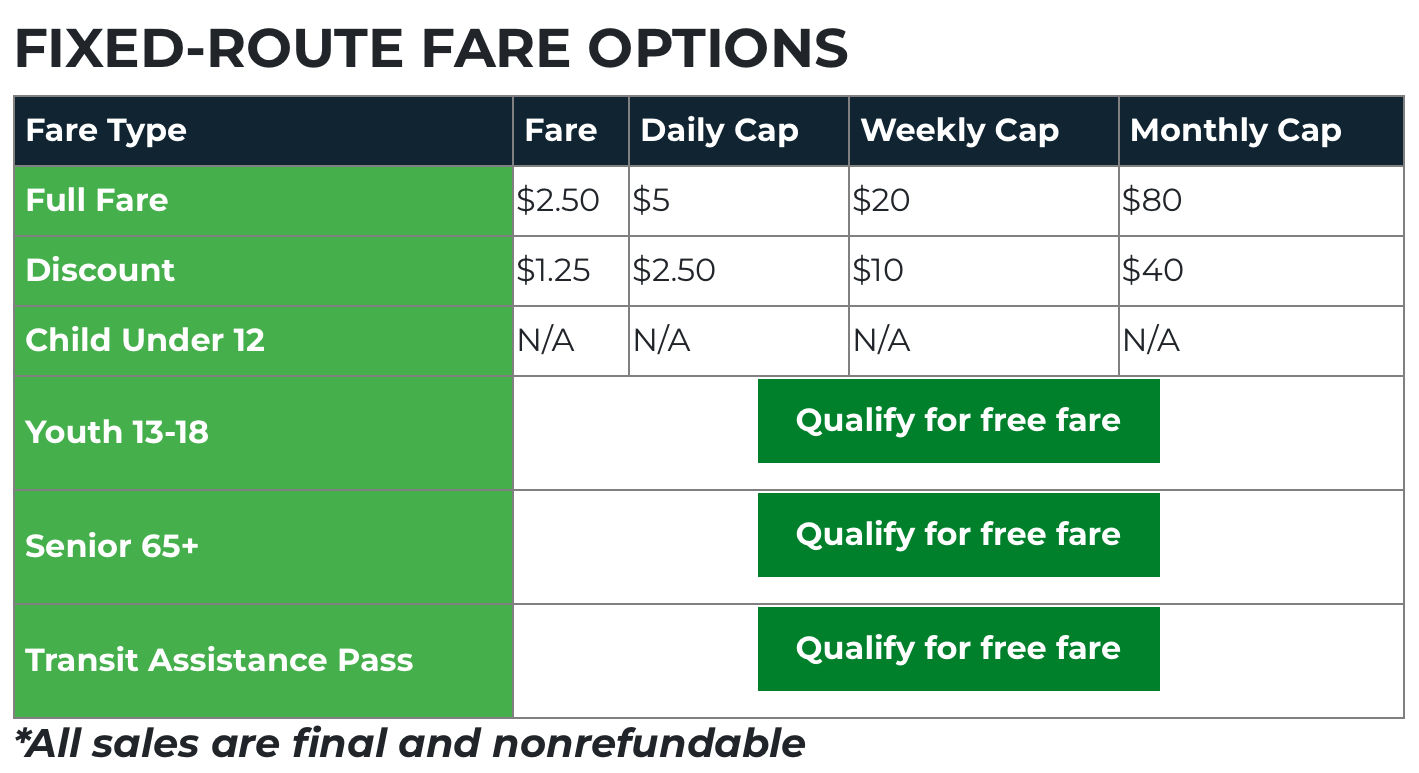
For readers who are frequent GoTriangle riders— fare collection will occur with either exact cash change or through the Umo transit app. GoTriangle is offering a variety of assistance programs and discounts for students, seniors, disabled riders, and low-income riders. There will also be a month-long grace period next month, where GoTriangle will offer free rides to those using the Umo app that enter the benefit code listed below:
GOT-Q7H3-W7BK
Of the GoTriangle affiliate networks, GoRaleigh will also resume fare collection starting the first of the month. GoCary and GoDurham will continue operating fare-free, while Chapel Hill Transit will maintain its fare-free service dating back to well before the pandemic.
I have mixed feelings regarding the return of fare collection for GoTriangle. I find it difficult to accept that a fare-free transit service can operate as a viable commuting alternative to a private motor vehicle, especially in a region with woefully underfunded transit service. Fare collection in the Triangle could bring about immense expansion making it a no-brainer for those commuting to and from the core areas of Durham, Chapel Hill, Research Triangle Park, and Raleigh. All of the largest transit providers in the country do charge fares, and in turn see more competitive service and better ridership. Furthermore, GoTriangle has procedures in place to relieve socioeconomically disadvantaged riders so that the majority of commuters utilizing their services can either afford fares or belong to an employer that subsidizes the costs associated with transit ridership.
However, fare collection is antithetical to the mission of public transit in the first place. Just as we don’t charge individuals accessing the public library or sending their child to the public school, public transit should shun no rider regardless of their ability to pay. This is especially pertinent for a region such as ours where the burden of car dependency falls the most on those who either cannot drive for a variety of reasons or have to make financial sacrifices to afford their own vehicle for commuting. A major reason why so many transit authorities across the United States rely on fare funds in the first place is because of how underfunded these systems are by our tax dollars.
The indefinite suspension of fare collection on GoDurham buses is a different matter to me. GoDurham boasts the highest ridership per capita in the entire region and is far less commuter-oriented than GoTriangle. Consequently, the median income of GoDurham riders is likely lower than GoTriangle riders commuting to white collar jobs in RTP or Chapel Hill. This is not to say that riders of either system are a monolith. I would argue that for this reason, fare-free transit is more essential for local buses than regional buses in the effort to establish fare-free service across the system.
I’ve written in the past about other mid-size cities that have maintained fare-free transit such as Richmond; larger cities such as Boston have piloted fare-free bus routes over the past few years. Feel free to drop in the comments what fare-free transit could mean for you and your community!
"Just as we don’t charge individuals accessing the public library or sending their child to the public school, public transit should shun no rider regardless of their ability to pay."
As a Richmonder who advocated for fare-free extension here in 2022 to 2025, I'm right with you for fare-free service. I actually think there's several other ways to offset fare from ad dollars to investing in TOD parcels as the transit agency and collab for residential/commercial opportunities. The latter is how transit agencies made money back during streetcars. You've got a subscriber in me. Great stuff!
Oh boy just what I need to initiate a rant. I have incredibly mixed feelings as well, obviously the purpose of a transit system is not to make money but to move people. However, much like the automobile dominated transportation system, if you are not financially sustainable in the long term, then you aren't sustainable at all. If you don't have money to meet your operating & maintenance costs then there will come a time when you cease to exist and no longer achieve your missing of moving people. There are both positive (and negative) feedback loops that come with the return of fares, since more ridership = more revenue = potential system improvements (and the inverse). When I don't drive into the office, I use GoRaleigh. If I go into the office 3x per week, that comes out to about 26 transit trips per month or ~$400 in bus fares per year. For my household it's not a large amount of money (and I acknowledge for others that may be catastrophic), but the real opportunity cost (which may well force me into driving when I go into the office) comes from not taking advantage of "free" parking provided by my employer. The cost of most of this is included in my company's office space lease, up to a certain number of spaces per day. After that point, the company pays the standard rate with has some hourly tiers but maxes out at something like $15 for 8+ hours (so a typical workday) or around $2,600 per year at 3 days/wk. The return to fares isn't the biggest issue, it's the hidden costs of driving that most people have no choice in other than to play along, and you can't blame people for driving, when they effectively get paid to.